Chicken Road at 1xBet gives Canadian players a quick, decision-based casino game where every extra move trades more risk for a larger possible multiplier. This guide focuses on what you actually need before you play: how a round works, what to check on the screen and how to keep a session under control.
What you see when you open the game
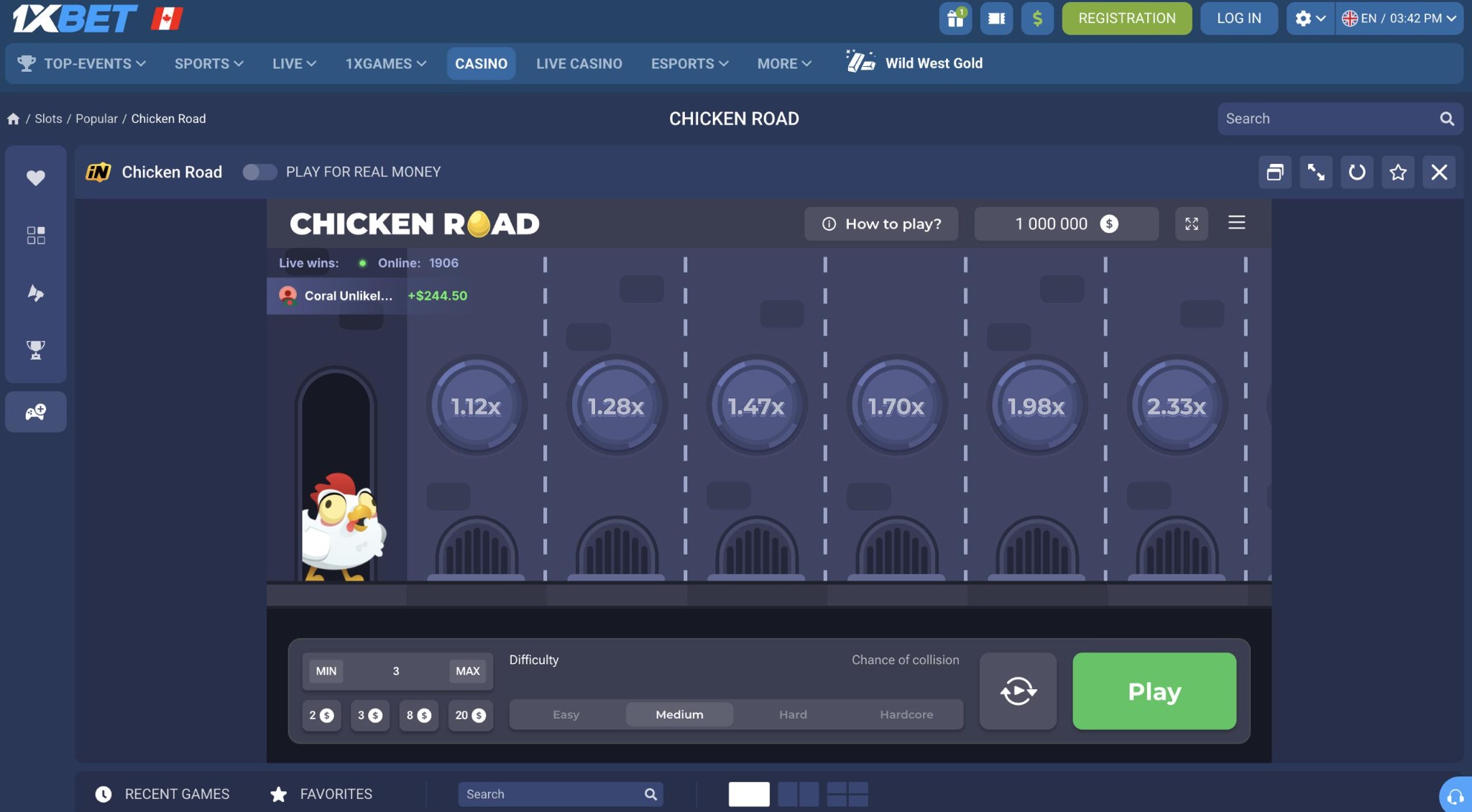
On 1xBet, Chicken Road appears inside the casino area with the betting panel and road layout visible on the same screen. The interface keeps the main information close together: stake size, difficulty and the available multiplier steps.
That matters because the game moves quickly once a round starts. Before you place a bet, take a few seconds to confirm the amount and the difficulty rather than relying on what you used in the previous round.
| Stake | How much you risk in the round |
|---|---|
| Difficulty | Changes the risk profile |
| Multiplier | Shows the current potential return |
| Cash-out choice | Ends the round and locks the current result |
The basic decision in every round
Chicken Road is simple to understand because each round asks the same question: do you stop now or continue for a higher multiplier? A successful step increases the potential payout, but continuing also exposes the stake to another risk point.
In practice, the safest habit is to choose a target before the bet begins. You can still change your mind, but a pre-set plan makes it easier to avoid impulsive choices.
A sensible first session
Start with the smallest stake that still lets you see how the game behaves. Spend several rounds learning where the controls are and how quickly the multiplier changes.
After that, try one difficulty for a full short session instead of switching constantly. This gives you a clearer sense of volatility and makes your results easier to evaluate.
A simple session plan
- Set a maximum amount for the session.
- Use one stake size for several rounds.
- Choose a realistic cash-out target.
- Take a break after a fixed period of time.
Common mistakes to avoid
The biggest mistake is treating a recent loss as a reason to bet more. Each new round should be approached on its own. Increasing the stake because you feel you are due a win is not a strategy.
Another common problem is pushing for a bigger multiplier after reaching the target you originally planned. If you set a cash-out point, respecting it is more useful than trying to squeeze extra value from every round.
Watch for these warning signs
- You are raising stakes after losses.
- You are playing longer than planned.
- You are thinking about borrowing money to continue.
Keep the game in perspective
A quick game can create a strong sense of momentum, especially when several rounds happen in a few minutes. Build breaks into the session before you start.
If the game stops feeling fun, close it. You do not need to finish a planned number of rounds, and you should never use money reserved for bills or everyday expenses.
Frequently Asked Questions
No. The rules are straightforward, but the risk increases as you continue. Learning when to stop is more important than learning many controls.
No. It mainly changes volatility and the size of possible multipliers. A harder mode can also produce faster losses.
Yes, and short sessions can make budget control easier. Decide how long you want to play before you begin.