Chicken at Stake gives Canadian players a quick, decision-based casino game where every extra move trades more risk for a larger possible multiplier. This guide focuses on what you actually need before you play: how a round works, what to check on the screen and how to keep a session under control.

Why the Stake version is different
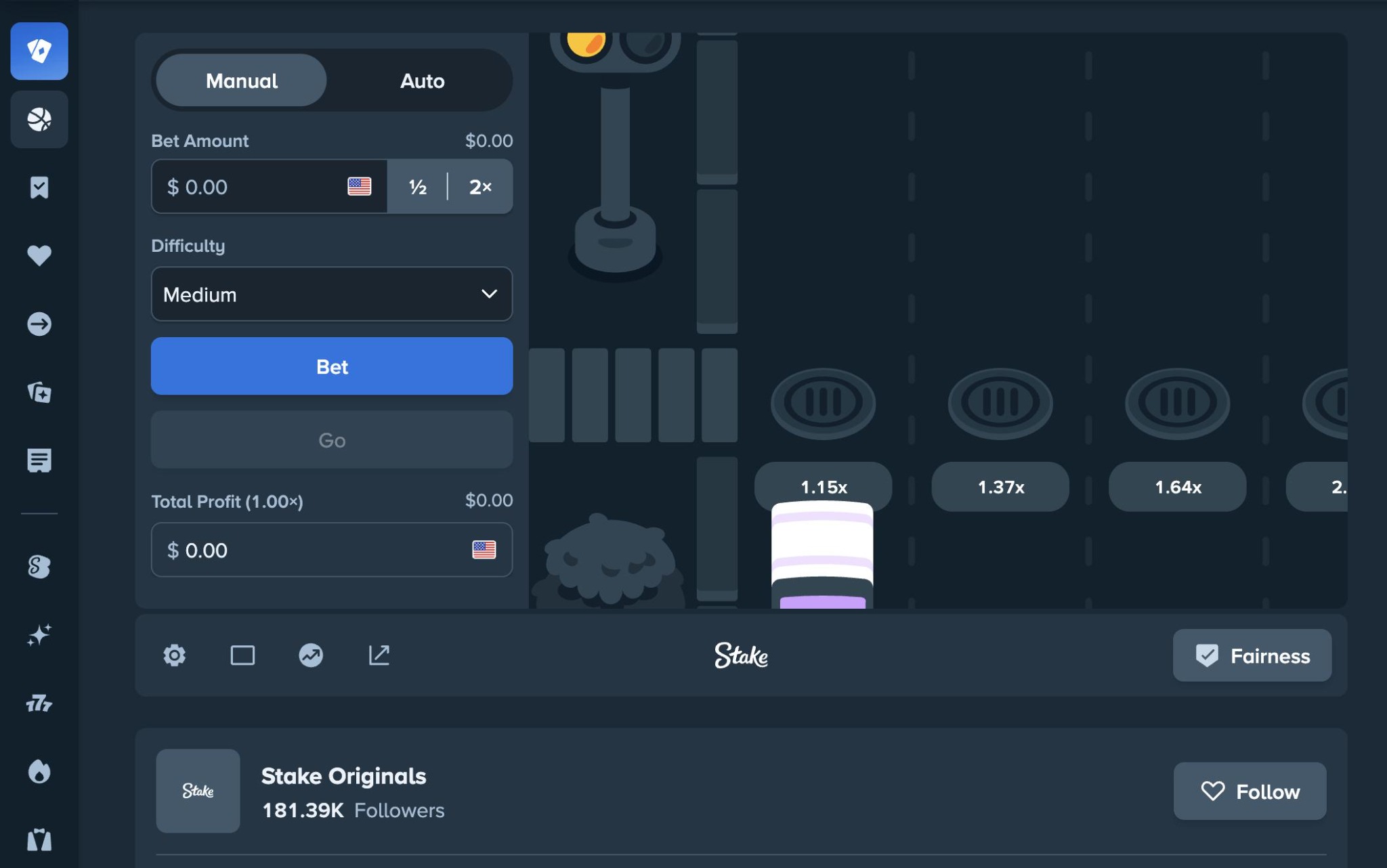
On Stake, the in-house game is called Chicken rather than Chicken Road. The idea is still familiar: you place a bet, move through a sequence of risk points and decide when to stop before the run fails.
The layout is more stripped back than many themed casino games. You mainly work with the bet amount, difficulty and progression on the road. That makes the controls easy to learn, but it does not make the risk disappear.
| Name on Stake | Chicken |
|---|---|
| Format | Stake Original risk game |
| Core action | Advance or cash out |
| Difficulty | Selectable |
| Main skill | Risk management rather than prediction |
Understanding the risk settings
Difficulty changes how demanding the route feels. A lower setting usually gives you a calmer progression, while a higher setting makes the possible rewards grow faster and losses arrive more sharply.
Do not pick a level because its top multiplier looks attractive. Pick it because you understand how much of your session budget you are willing to risk on each round.
How to approach your first rounds
Begin by checking the selected currency and bet size. Then choose one difficulty and keep the stake small while you learn how the game responds after each move.
After this, decide whether you want to use a modest fixed target or make each cash-out decision manually. The important part is to avoid increasing your risk simply because the last round ended badly.
Good habits for Stake Chicken
- Check the bet amount before every new session.
- Use a difficulty that matches your budget.
- Keep cash-out decisions consistent.
- Treat every stake as money you may lose.
Bankroll habits that make sense
A bankroll plan cannot turn a casino game into guaranteed income. What it can do is stop one emotional decision from consuming the whole session budget.
Separate the amount you are prepared to lose from the rest of your money. Then divide that amount into smaller stakes and stop once the limit is reached, even if you feel tempted to continue.
Playing responsibly on a fast game
Chicken can move quickly, so time can pass faster than expected. Use a timer or the platform's own responsible-play tools to create a clear stopping point.
If you notice that you are trying to recover losses or that the game is affecting your mood, end the session. A break is more useful than changing difficulty or doubling the next bet.
Frequently Asked Questions
It follows a similar risk-and-reward idea, but Stake presents its own in-house version under the name Chicken.
No. Lower-risk choices may reduce volatility, but every real-money round still carries a chance of loss.
Learn the controls, keep the stake small and set a firm session limit before trying more volatile settings.